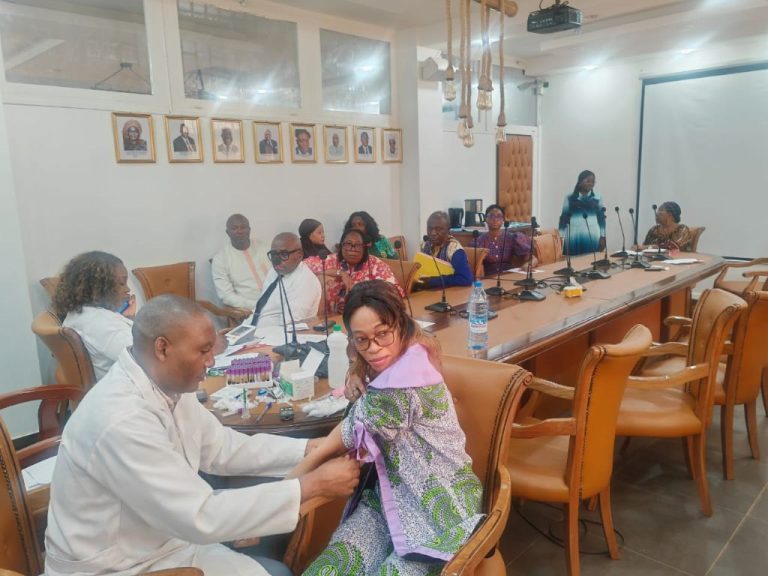
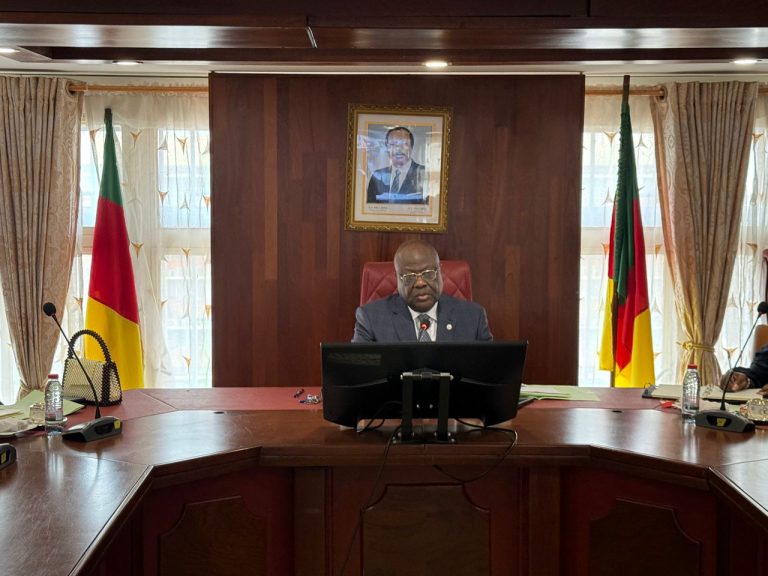
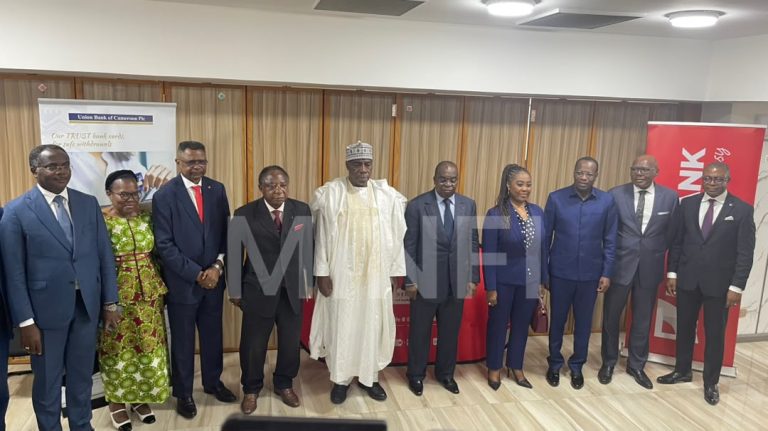
February 9, 2026 will mark the history of the General Directorate of Treasury, Financial and Monetary Cooperation. At the prestigious Concord International Hotel in Yaoundé, executives and staff of our institution gathered for an exceptional meeting, initially scheduled for February 7, but postponed to ensure optimal participation and quality exchanges.
Under the enlightened leadership of the Director General and in the presence of the Inspector General of Services, this annual consultation constituted a privileged moment of strategic reflection, innovation, and collective recognition. A day where clear-sighted diagnosis and visionary ambition came together to chart the path for a modern, efficient Treasury serving national economic development.

I. Three Presentations at the Heart of Our Transformation
State Treasury Management: An Uncompromising Diagnosis
Mr. Tigribé Eloi, in a remarkable exercise of clarity and expertise, opened the proceedings with a masterful presentation on state treasury management in a context of liquidity constraints. His analysis, both rigorous and constructive, highlighted the structural challenges facing our institution.
The figures reveal the scale of the challenge: the stock of outstanding payments increased from 325 billion FCFA in 2017 to 975 billion in 2025, a threefold increase in less than a decade. This evolution reflects the growing budgetary constraints weighing on public Treasury management.
The analysis also highlighted several critical factors: a liquidity index of only 80%, with 20% of collected resources in the form of accounting operations; significant gaps in cash flow planning; and a financing deficit for correspondent operations approaching 100 billion FCFA for the 2025 fiscal year alone.
Faced with this assessment, Mr. Tigribé formulated structural recommendations: improve the accuracy of budget frameworks, ensure balance in accounting operations, connect the Treasury Department to the Treasury information system, and establish rigorous budgetary discipline. As he rightly emphasized: "Treasury is only the consequence of actions taken upstream." A truth that calls for collective responsibility in public finance management.

Digitalization of the Insurance Sector: A Silent Revolution
Mr. Mvondo Mezang Yvan then presented a captivating analysis of the challenges and issues of digitalization in the insurance sector. His presentation revealed a profound ongoing transformation, driven by technological innovation and improved sector governance.
The results obtained demonstrate the effectiveness of this strategy: the insurance market now generates 288.71 billion FCFA in 2024, with an annual growth rate of 5.2%. Even more remarkable, claims payments have experienced spectacular growth, rising from 197 million FCFA in 2021 to 2.5 billion in 2025, demonstrating the direct impact of digitalization on improving service to policyholders.
The TPV platform (Public Passenger Transport) perfectly illustrates this success. This innovative tool now enables real-time tracking of subscriptions, authentication of certificates, and effective securing of public Treasury revenues. The turnover of the automotive branch bears witness to this: an increase from 44.76 billion in 2020 to 60.16 billion in 2024.
The objective set for the coming years is ambitious but achievable: to reach a penetration rate of 2% of GDP, approximately 600 billion FCFA. A challenge worthy of a sector in full transformation, supported by significant institutional investments and a modernized regulatory framework.
Treasury Guarantee Bonds: A Major Financial Innovation
The highlight of this day was undoubtedly Mr. Abouem Julien Serge's presentation on Treasury Guarantee Bonds (OTG). This bold financial innovation could radically transform the financing methods for national economic development.
The ambition is clear and visionary: to mobilize one trillion FCFA per year on our own financial market. The proposed mechanism is based on creating long-term debt securities (10, 15, or even 20 years) with a unique characteristic: the ability to serve as collateral for bank loans, customs duties, or public contracts.
This innovation addresses a well-identified structural challenge. Currently, the State absorbs a significant portion of locally available credit, limiting private companies' access to financing, while banking institutions favor short-term Treasury securities over financing the productive economy.
Treasury Guarantee Bonds will enable:
- ● Extending public debt maturities and reducing financing costs
- ● Directing resources toward structural productive projects (infrastructure, energy, agriculture)
- ● Democratizing access to investment through a mobile application accessible to all
- ● Freeing up bank financing capacity for the productive private sector

II. Constructive and Enriching Exchanges
The debates that followed the presentations were remarkable in their quality and depth. Participants raised relevant questions about the real impact of digitalization, risks of private sector crowding out, methods for managing cash advances, and the necessary consistency between the commitment plan and the cash flow plan.
In our economic environment, it is the public sector that drives the dynamics of wealth creation, with the private sector subsequently contributing to the multiplier effect generated by the State.
"A consensus naturally emerged around three fundamental pillars: a high-performance information system, rigorous planning, and impeccable budgetary discipline.


III. Voices from the Field: Challenges and Commitment
In a spirit of transparency and constructive dialogue, representatives of various departments were given the floor: general pay offices, specialized pay offices, overseas pay offices, accounting officers, general receivers, and SRAMA. Each shared, with frankness and professionalism, the daily realities of their missions.
The challenges mentioned are multiple: infrastructure constraints (energy insufficiency, building waterproofing problems, aging computer equipment), budgetary limitations in operating credits, and the persistent accumulation of outstanding payments that complicates daily public service delivery.
Faced with these testimonies, the Director General reaffirmed his commitment to continue efforts to improve working conditions and provided strategic advice to all staff. This attentive listening and willingness to act demonstrate modern management, centered on people and collective performance.
IV. A Remarkable 2025 Assessment
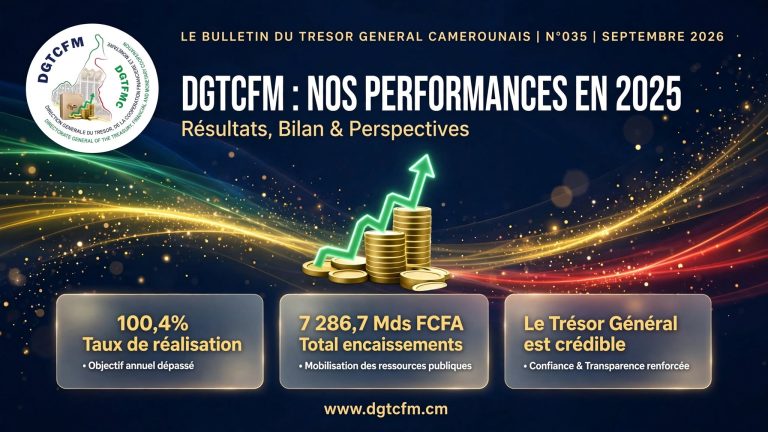
The activity report presented at the end of the proceedings revealed a result of which the institution can legitimately be proud: 95% of the objectives of the DGTCFM were achieved during the 2025 fiscal year.
This exceptional execution rate, achieved in a particularly demanding national and international economic context, demonstrates the unwavering commitment of all staff and the relevance of the institutional strategy implemented. It also constitutes a solid foundation for confidently approaching the challenges of the 2026 fiscal year.
V. Recognition of Excellence: An Institutional Tradition
Once again this year, the tradition of merit recognition, established ten years ago by the Director General, continued with distinction. Based on objective and measurable criteria (consistency of summary statements, scrupulous respect for deadlines, quality of account reconciliations, reliability of accounting data), this evaluation distinguished the most remarkable performances.
2025 Fiscal Year Awards
Specialized Pay Offices & General Treasuries:
- 1st 1st prize: MINSUP Specialized Pay Office & Maroua 1 General Treasury
- 2nd 2nd prize: MINTP Specialized Pay Office & Maroua 2 General Treasury
- 3rd 3rd prize: MINMAP Specialized Pay Office & Yaoundé 1 General Treasury
- 4th 4th prize: MINMESA Specialized Pay Office & Bafoussam General Treasury
- 5th 5th prize: MINRESI Specialized Pay Office & Yaoundé 2 General Treasury


Beyond these distinctions, several staff members received congratulatory and encouragement letters jointly signed by the Minister of Finance and the Director General. This personalized recognition values individual excellence and encourages positive emulation within all departments of the General Directorate.


VI. Strategic Directions 2026: Heading Toward the Future
In his closing address, the Director General outlined the major strategic directions for the 2026 fiscal year. An ambitious program articulated around several priority areas of modernization and performance.
Major strategic axes:
- ● Continuous modernization of control mechanisms and acceleration of procedure digitalization
- ● Consolidation of public accounts quality and intensification of the fight against deficits
- ● Strengthening SME financing mechanisms and reducing financial exclusion
- ● Effective implementation of the Treasury Payment Application nationwide
- ● Diversification of financing instruments to optimize public debt costs
- ● Continuation of structural reforms in the insurance and microfinance sectors
- ● Installation of a modern and efficient customer service focused on user satisfaction
It is through civility, integrity, respect for public assets, and a sense of service that we will achieve our dual objective: improving the efficiency of the Public Treasury and optimizing national economic development.
"Conclusion: A Founding Day
The 2026 Annual Consultation of Treasury Services will remain in memory as a pivotal moment in the history of our institution. Between encouraging assessments, bold innovations, and ambitious prospects, this meeting demonstrated the vitality and dynamism of the DGTCFM.
The exchanges were rich, the diagnoses clear-sighted, and the proposals constructive. Above all, there was a collective will to transform challenges into opportunities, to make constraints a lever for innovation, and to build together a Cameroonian Public Treasury that is a reference of excellence in Central Africa.
As the 2026 fiscal year begins, one certainty stands out to all: together, guided by discipline, driven by professionalism, and carried by innovation, we will build a more efficient, more attractive Public Treasury, better equipped to meet the challenges of national development.