


As every Monday, a flag-raising ceremony was held within the institution, accompanied by The Civic Moment, a time dedicated to raising awareness about professional and civic values.
On December 8, 2025, the General Affairs Department (GAD) led the presentation, focusing on a crucial topic: sexual and moral harassment in the workplace.
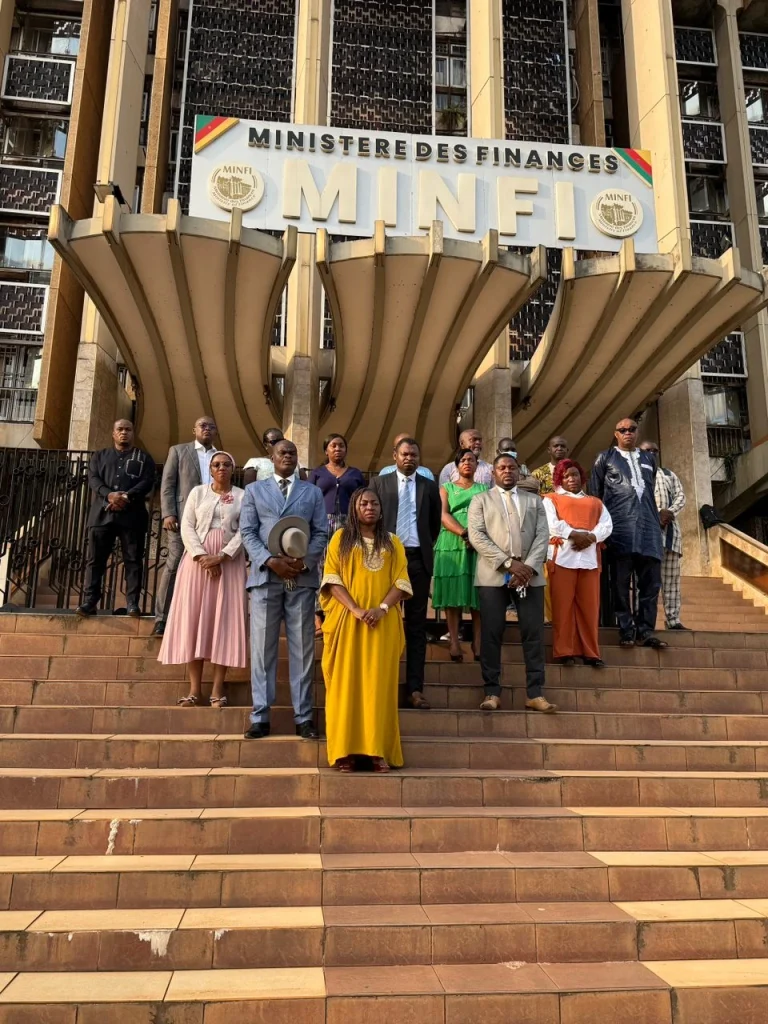


This presentation highlighted the obligations of civil servants, the forms of harassment, their manifestations, and their consequences on dignity and well-being in the workplace.
👉 Find below the full text of the speech delivered during the ceremony, to better understand the issues and strengthen our collective commitment against all forms of harassment.
📄 FULL SPEECH
Sexual and Moral Harassment in Work Relations
Civil servants must refrain from any act of sexual and moral harassment in work relations.
“
I. Sexual Harassment
Sexual harassment in work relations constitutes any behavior with sexual connotations or any other behavior based on sex which the perpetrator knows or should know affects a person’s dignity at work.
Moreover, sexual harassment is the situation in which unwanted conduct of a sexual nature, expressed physically, verbally or non-verbally, occurs with the purpose or effect of violating a person’s dignity and, in particular, creating an intimidating, hostile, degrading, humiliating or offensive environment.
Sexual harassment is established in one of the following three cases:
- ●
The behavior is untimely, abusive and hurtful to the person subjected to it; - ●
The fact that a person rejects or accepts such behavior from a colleague or service user is used explicitly or implicitly as a basis for a decision affecting that person’s professional interests; - ●
Such behavior creates a climate of intimidation, hostility or humiliation towards the person subjected to it.
Under these conditions, the behavior can be physical, verbal or non-verbal, and the intentional element of the behavior is presumed.
(See sanctions in the Cameroonian Penal Code)
II. Moral Harassment
Moral harassment in work relations constitutes any conduct which, through its repetition or systematization, undermines a person’s dignity or psychological or physical integrity. In this regard, French law states that “no civil servant should be subjected to repeated acts of moral harassment which have the purpose or effect of degrading working conditions likely to infringe their rights and dignity, impair their physical or mental health or compromise their professional future.”
Legal experts have identified five (5) types of behavior that may be classified as moral harassment:
- Preventing the person from expressing themselves. This can be reflected in particular by their exclusion from work meetings, by deprivation of telephone access;
- Isolating the person by confining them, for example, to a very remote location;
- Discrediting the victim in front of colleagues or third parties;
- Undermining the victim’s work and in particular pushing the person concerned to make mistakes and drawing all the consequences;
- Compromising the victim’s physical or psychological health, which may lead to suicide.
In conclusion, harassment is not only hierarchical. It can be upward, downward or even horizontal, i.e., between colleagues.
“
Ref: Ethics and Professional Conduct of Civil Servants, Georges Jean TEKAM (May 2010)